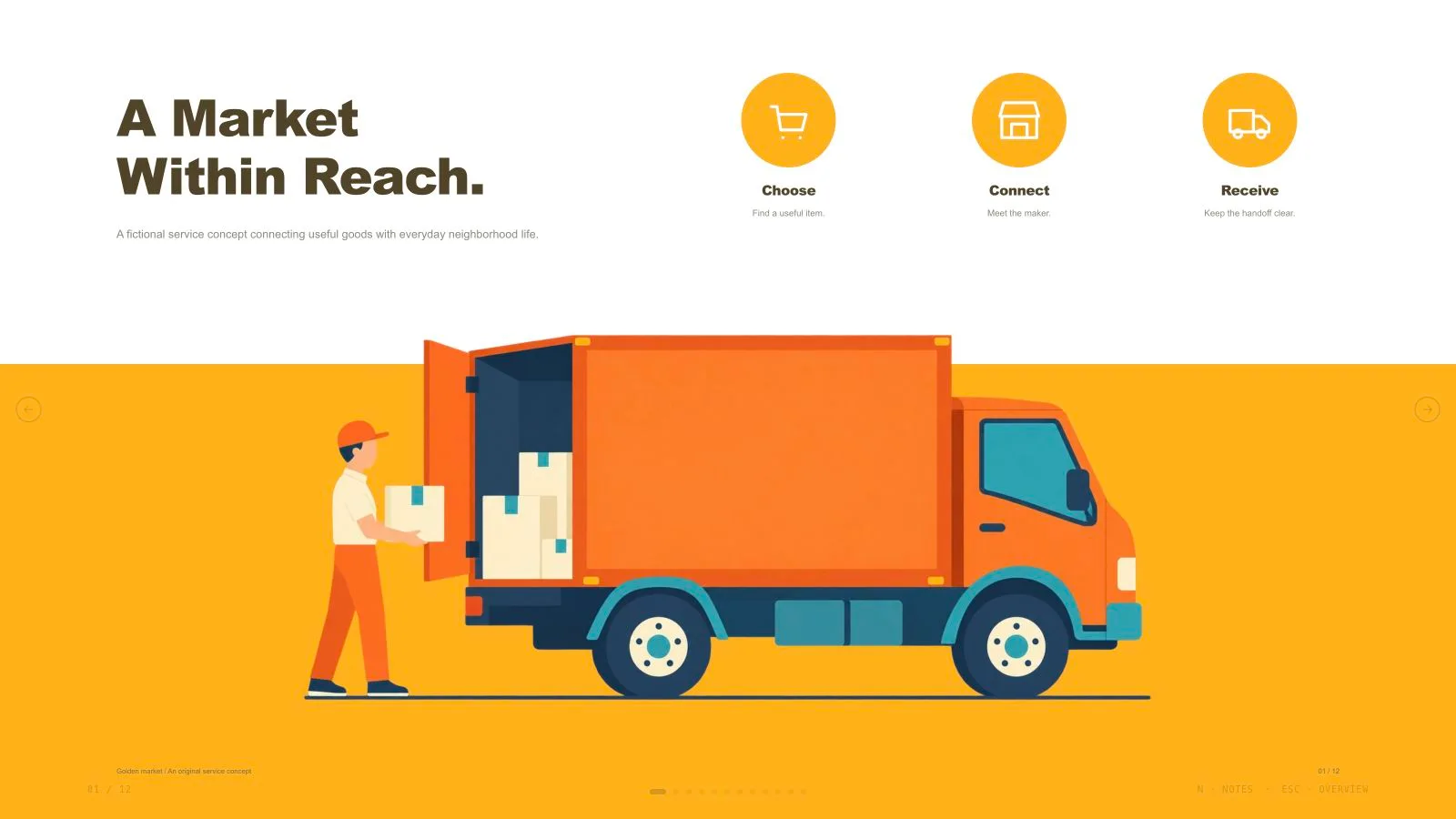
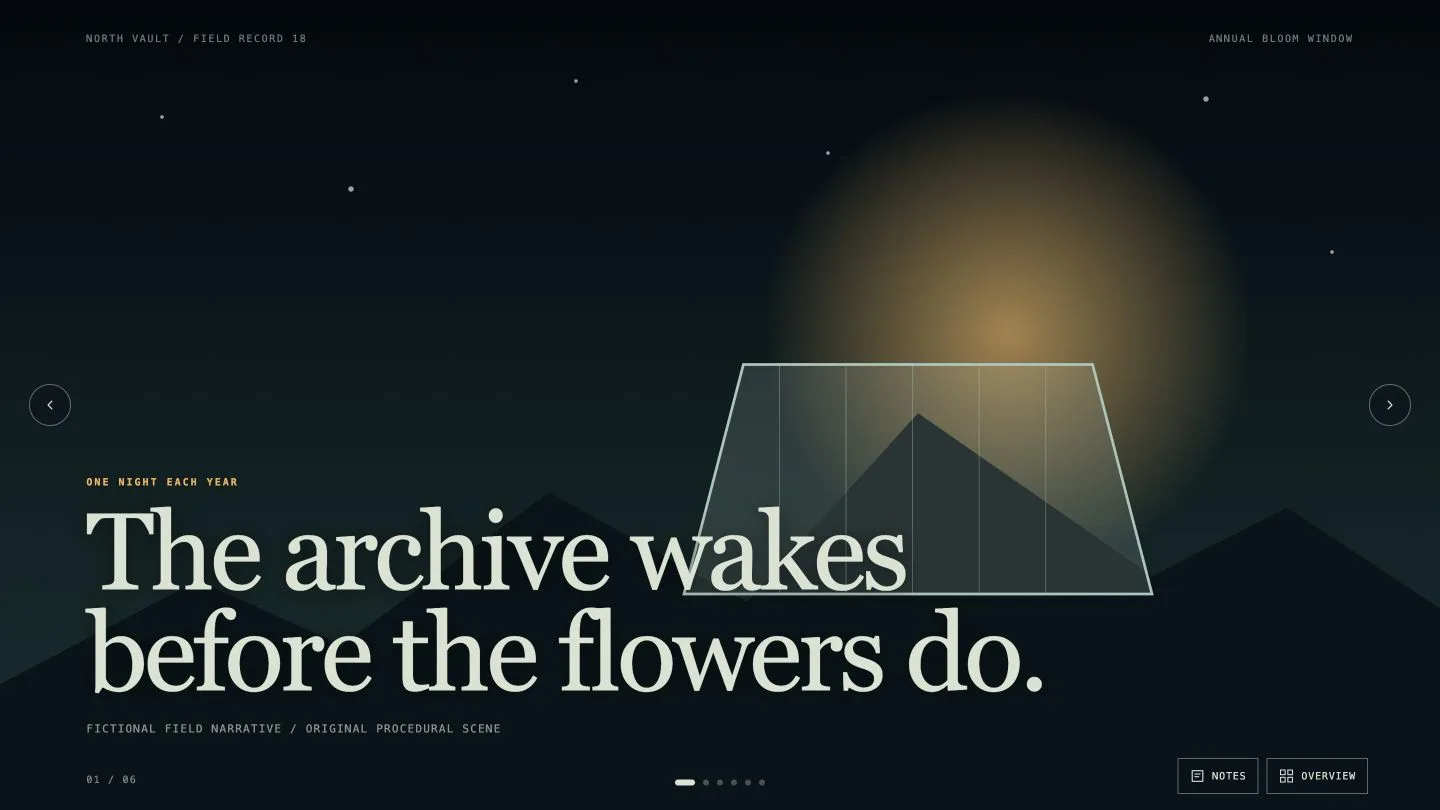
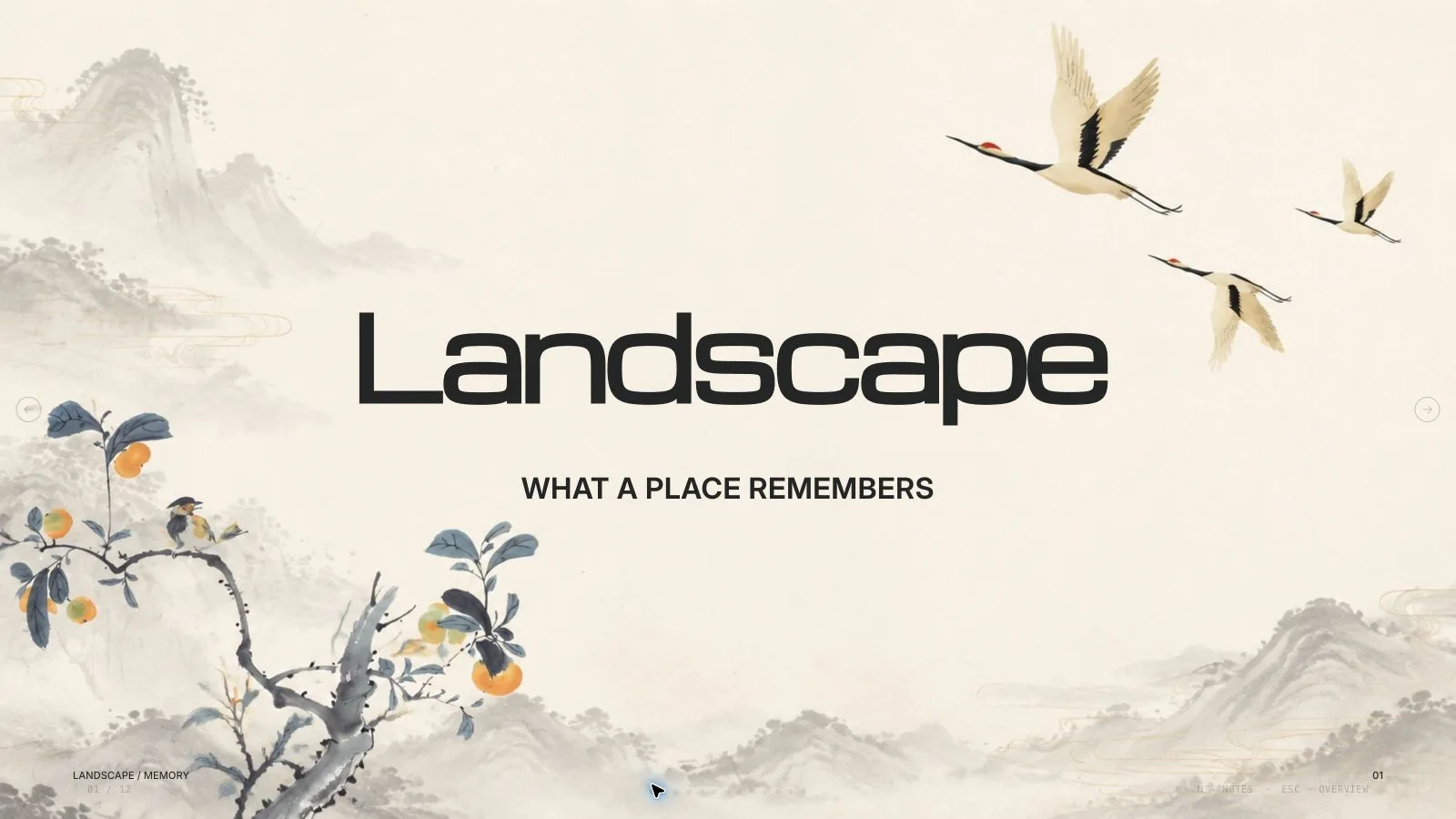
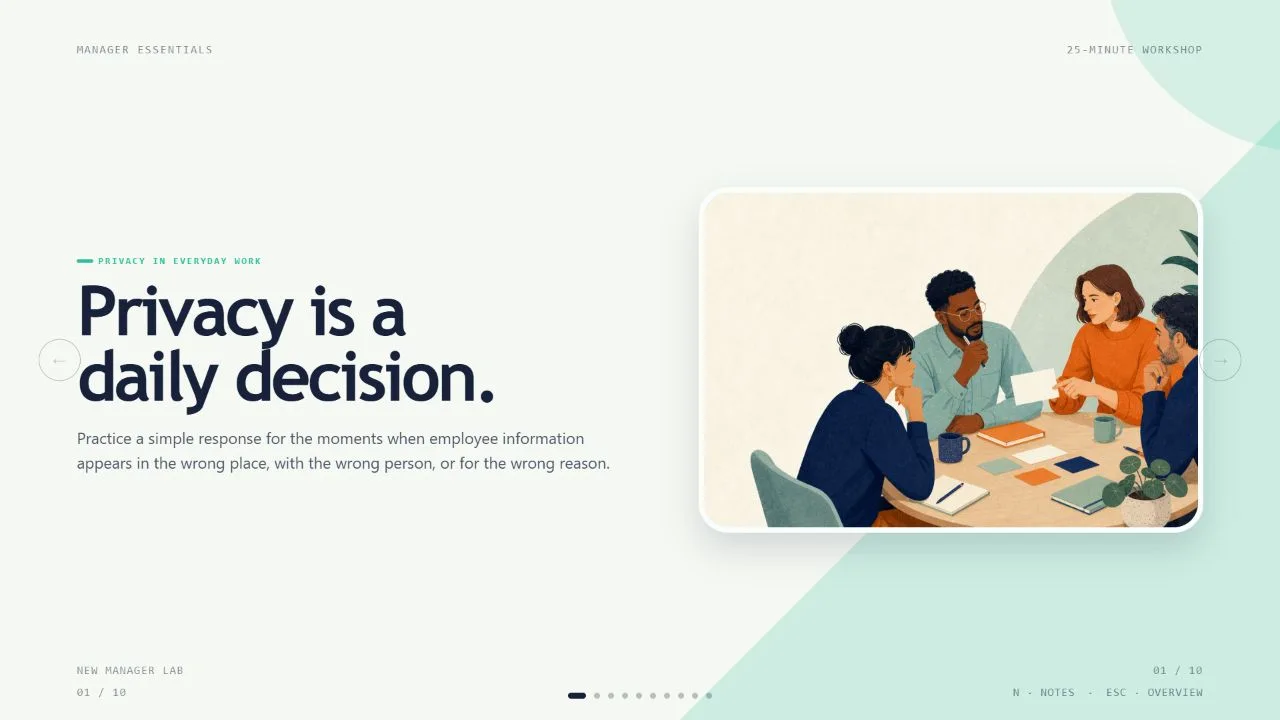
Present a collection through the relationships between objects, materials, images and place. Gallery Catalogue Deck uses compact serif/italic titles, mustard rules, white reading panels and vivid offset photographs, with enough gallery-like spacing for each image to matter. Its exhibition example is a visual reference; the page count and artwork plan follow your approved subject.
What you get
A catalogue-style presentation built to the exact requested count, with twelve optional recipe roles spanning textured opening, welcome, street observation, mural, materials, place, installation, gesture, color studies, people, exhibit selection and close. Select, combine or extend them rather than treat the example as a mandatory tour.
An editorial hierarchy of small serif headings with selective italics, amber labels/rules, generous margins, tiny captions and offset paper panels. Circular material windows, cut-corner portraits, image/quote overlays and a cloud-backed selection spread vary the visual weight while retaining the same catalogue language.
Four generation-time directions: Street and studio, Objects and craft, Modern architecture and Portrait edition. Twenty-three local catalog pictures fill twenty-three example slots, with a mix of general portraits/materials and topic-specific mural, craft, sculpture, jewelry, street and architecture scenes. They are concept illustrations, not a factual exhibition collection or artist provenance.
A page-specific artwork ledger with subjects, aspects, placements, palette, prompts and saved results for the actual plan. Each pictorial source is used once; recropping or recoloring is not independent artwork. Functional icons and diagram primitives may recur. The picture count is determined by content, not the twenty-three-slot example.
A standalone HTML deck with viewing, editing, thumbnails, notes, presentation mode and print styling. Requested PPTX preserves text/notes and separate pictures with other artwork rendered into layers; PDF gives one 16:9 page per slide. Installation includes style recipes/runtime, Python build/check and Node image tools, not a verified museum catalogue.
Before you choose
Give every image a reason to be next to its caption and its neighboring image. If the relationship depends on an invented attribution or a scene that is not part of the collection, change the evidence or label it illustrative rather than let the gallery treatment imply provenance.
Good fit
A material-culture exhibition or curatorial proposal needs to place objects, people and settings in a coherent editorial sequence.
A team wants a consistent catalogue visual language across explanations, comparisons, material studies and a selection of exhibits.
A creator can supply a clear audience, approved messages and source material and wants a custom-length presentation rather than a fixed page inventory.
Not for
Reproducing protected source artwork, identities, recognizable reference faces or characters. Use approved/original assets and keep provenance clear.
Automatic research, attribution, authenticity checking or verification of unsupported curatorial claims.
A PowerPoint file in which all frames, masks, diagrams and decorative elements remain native editable shapes.
Passing generated library scenes off as photographs of actual exhibition works, artists, institutions or real venues.
How to use
You say/gallery-catalogue-deck Create a twelve-page exhibition catalogue for a fictional collection of everyday objects, using colorful photography and fine mustard rules.
Provide topic, audience, purpose, approved messages/source material, language and exact count. Include actual object/artist information and rights-cleared imagery if the deck describes a real collection. If no count is supplied, agree one from the material and speaking duration rather than inherit twelve pages.
Plan distinct page roles using the optional catalogue recipes. Choose Street and studio, Objects and craft, Modern architecture or Portrait edition during generation. Preserve compact serif/italic hierarchy, fine mustard/amber rules, white space and varied image/panel compositions instead of making a row of identical cards.
Build an art ledger for the selected slots with subject, aspect, placement, palette, prompt and saved result. Choose suitable library reuse, reuse with generated gaps or all-new images, using approved supplied assets first. The twenty-three local pictures include topic-specific craft, mural, art and architecture scenes; check catalog suitability rather than treat them as neutral documentary proof.
Use each artwork on one page only; crops, rotations and color changes remain the same source. Match the kit’s mixed aspect ratios for rectangular fields, circular studies and cut-corner portraits, keeping complete faces/hands where relevant. Keep essential copy/captions outside raster art and use only meaningful consistent inline SVG cues.
Embed library IDs through the checksum-verifying Node helper. Authorized new images can use a built-in tool or optional paid FAL route with FAL_KEY, recording returned task IDs for status/fetch without automatic failure retries. Costs/account limits can apply. If a slot cannot be filled suitably, label and list it; a page-plan review can precede optional new imagery.
Replace the fictional Small Wonders proposal, curatorial statements, captions, people and object claims with approved material. Compose/build/check with Python 3 and the agreed count/style kit; Node supports media helpers. Resolve leftovers, preserve useful resolution with quality-preserving WebP and embed final assets below 20 MB.
Open over local HTTP and compare all 1280×720 pages with the approved brief: scale, type, color areas, crops, image uniqueness, spacing and readable captions. Confirm page counters/thumbnails/notes match the actual list. Test Edit/E, content/pictures/order, notes, undo/redo, Save and reopening. Palettes are generation choices, not an editor preset menu.
Export requested PPTX/PDF, run check-pptx.py and inspect text/notes, portrait masks, pictures and font substitutions in the target presentation application. Deliver the visual review and disclose unfinished imagery or unverified provenance; only describe an export as checked after actually inspecting it.
Requirements and costs
You bring
Presentation topic and audience · Key messages or source material · Desired slide count and language
Dependencies
A browser for presentation and verified print export · Node.js for local validation · A host image generation tool for fresh artwork · Chrome, Chromium or Edge plus Node.js 20 or newer — required only for PowerPoint export
Outside costs
Generating new artwork may incur a separate provider charge. The included original example can be viewed without image generation.
Publisher testing
v1.0.5 — Claude Code / Claude Desktop / Cowork / Codex / ChatGPT
FAQ
Yes. Adapt the twelve recipe roles to your approved subject and exact requested count. Their sequence is optional, not a length limit. If you have no count, agree one from the content and presentation duration before generating.
Twenty-three local library images are available for suitable reuse, with approved supplied images first. Check topic-specific labels and actual subject fit, and use independent artwork for each page. Optional new imagery follows the page plan without a quota and may incur provider/account costs; the plan can be reviewed before those additions.
Use Edit or E in the HTML to change text, images, sequence and notes, then Save. Named directions apply during generation; the shared editor has individual colors but no preset theme picker. PPTX keeps text/notes editable and photos separate, while complex artwork/masks render into layers. Core build/check uses Python 3 and image helpers use Node. Inspect the real native output and fonts.
No. Its images demonstrate original concept scenes and material/color relationships. A real catalogue requires approved work images, facts, rights and attribution from the curator or collection owner; the visual style does not establish provenance or authenticity.
User reviews
—0 reviews
Select a star to share your experience.
No reviews yet. Ratings appear once readers share real experiences.