✦ Featured

Brand Story Deck

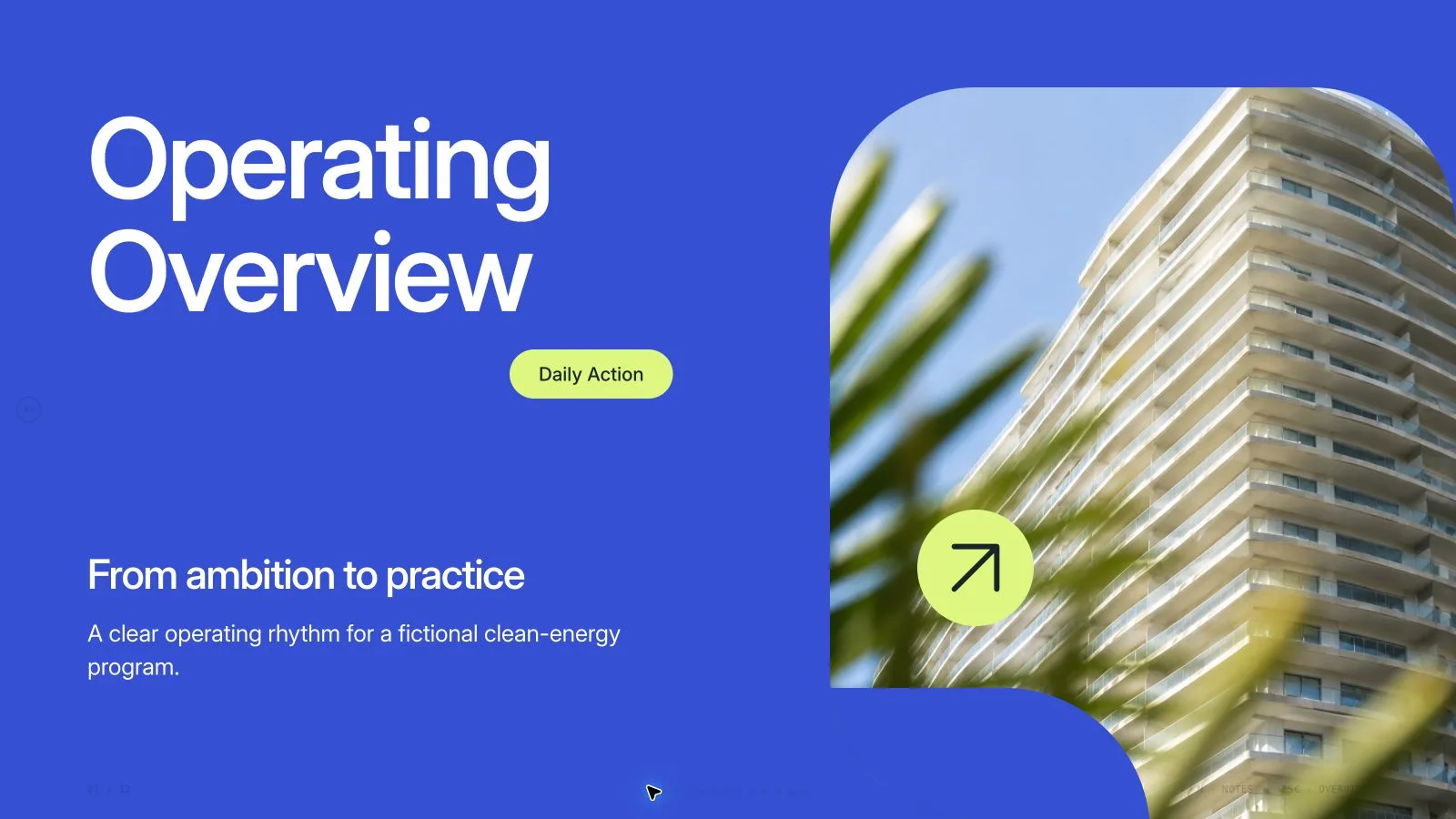
Explain why a brand exists before displaying its applications. Brand Story Deck turns an approved origin, tension, belief and promise into an editorial sequence with one statement per page. Condensed headlines, readable serif copy and a recurring clipped-corner motif connect the story to its visual codes, with editable 16:9 browser slides and a documented PowerPoint handoff.

What you get

  • A narrative moving through origin, friction, belief, visual codes, expression and future. Each page carries one primary statement, with notes adding the delivery context. The arc adapts to the approved material rather than requiring exactly one page for every stage.
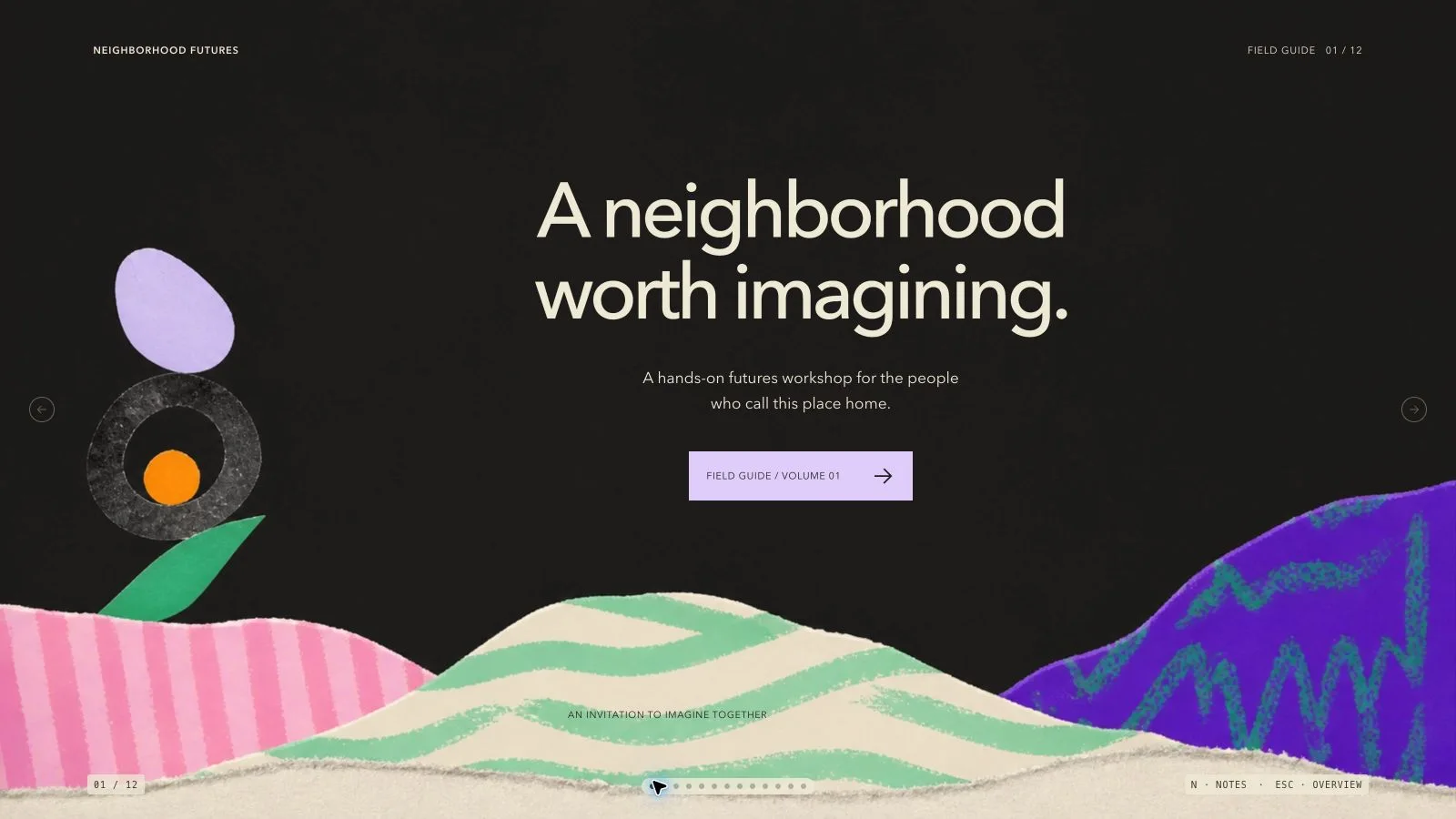
  • Varied magazine-like compositions: an oversized masthead, an origin split with one dominant artifact, a tension ledger, manifesto, palette/type/motif specimen, annotated application spread and a closing clipped shape. Page weight and dominant splits should vary so three consecutive slides do not feel like repetitions.
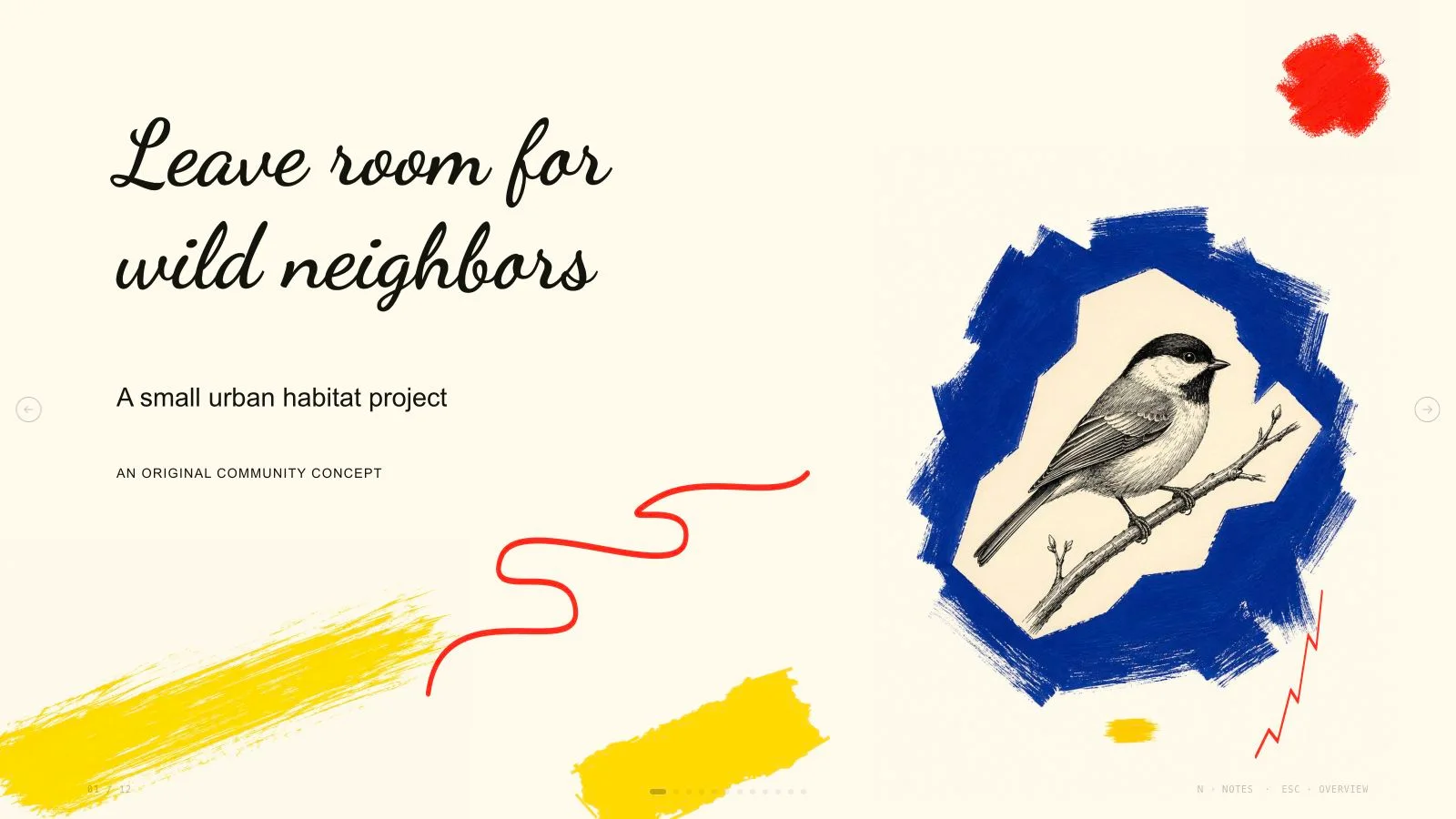
  • A coherent display/body pairing and one of four content palettes: Trail Signal, Night Orchard, Cobalt Press or Clay Index. Original CSS shapes and inline SVG build the graphic language; user-approved local photos may support the story without losing their own colors. New photography, stock logos and paid media generation are not required or part of this workflow.
  • A standalone HTML deck using the shared browser editor, with text, content objects and notes available for revision. Its installation includes seven style recipes, references and Python composition/build/check tools. The fictional Aster Field notebook brand, founding story and illustrative brief statistic are design examples, not approved facts about your brand.
  • Requested PPTX export with editable text and notes, separate picture objects and rendered artwork/background layers, or PDF with one 16:9 page per slide. A real handoff must state what was checked and any font or layout differences observed in the target presentation software.

Before you choose

Read the origin and promise without looking at the applications. If they do not explain why the visual codes belong to this brand, tighten the argument before adding more mockups. A clipped corner can unify the sequence, but it cannot substantiate a founding story or customer claim.

Good fit

  • A brand designer needs to explain an identity rationale and show how palette, typography and motif follow from the story.
  • A marketing or product team is preparing a positioning or launch narrative with an approved promise and proof.
  • A team wants to replace a generic brand deck with an editorial sequence whose compositions vary while the identity remains recognizable.
Not for

  • Inventing a founding event, testimonial, metric, certification or customer fact. Separate interpretation from verified material and resolve a missing key claim before composing the story.
  • A data dashboard or standard pitch assembled from identical card rows. The format emphasizes narrative and varied editorial weight.
  • Generating brand photographs, borrowing stock logos or using an image’s colors to override the approved identity. Graphic work uses original shapes/type/SVG, with photographs only from approved assets.
  • A guarantee that the browser’s graphic objects export as separately editable native PowerPoint shapes or retain identical font wrapping on another machine.

How to use

You say/brand-story-deck Turn this fictional repairable field-notebook brief into a seven-slide brand story.
  1. Provide the audience and occasion, origin, tension, belief, promise and approved evidence. Add voice cues, rights-cleared identity assets, target duration or approximate page count. Resolve unclear audience/claims first and record facts, approved language, inference, constraints and unanswered questions separately.

  2. Write an action-title spine from origin to friction, belief, visual codes, expression and future. Adjust it to the real material rather than inventing an origin story to fill a recipe. Keep one primary statement per page and speaker notes that add delivery context.

  3. Choose Trail Signal, Night Orchard, Cobalt Press or Clay Index and retain the condensed-display/readable-serif pairing, left-aligned body and clipped-corner motif. Plan varied page weights and avoid three successive slides with the same dominant split. Shadow treatments and corner folios should be specified as page design choices; do not assume dedicated browser toggles for them.

  4. Populate the seven style-kit recipes with approved copy, proof and graphic details. Replace Aster Field’s fictional identity, repair origin, sample statistic, notes and artifact labels throughout the model. Use editable CSS and original inline SVG first; approved local photos may be added without recoloring them to force the preset. Keep essential words live and avoid copied/model logos, remote assets or paid media tasks.

  5. Compose through plan.json and resolve leftover-example or unfilled-image reports, then build/check with Python 3 and the agreed slide count/style kit. The current core build uses bundled assets rather than Node packages. Keep final fonts/media embedded and the editor unchanged; UI language and story language are separate, with English story copy the default unless requested otherwise.

  6. Open over local HTTP and inspect every page’s type, clipped shapes, proof labels, contrast, crops and bounds. Use Edit or E for copy, pictures, order and notes; test undo/redo and Save (Cmd/Ctrl+S), then reopen the saved HTML. The four presets are generation choices, while the current editor permits individual color edits rather than a preset picker.

  7. Export the requested PPTX/PDF from the standalone deck. Run check-pptx.py and inspect text, speaker notes, artwork layers, fonts and line breaks in PowerPoint, Keynote or WPS. Review the story again after reordering and make sure the final promise is supported by the proof rather than merely echoed by the visual motif.

Requirements and costs

You bring
Audience and presentation occasion · Brand origin, tension, belief, promise, and approved proof · Voice cues and identity assets approved for use
Dependencies
Modern browser — required · Node.js 20 or newer — required for local validation · Chrome, Chromium or Edge plus Node.js 20 or newer — required only for PowerPoint export
Outside costs
Not collected yet
Publisher testing
v1.0.4 — Claude Code / Claude Desktop / Cowork / Codex / ChatGPT

FAQ

User reviews

—0 reviews

Select a star to share your experience.

No reviews yet. Ratings appear once readers share real experiences.

Similar Skills

View all skills