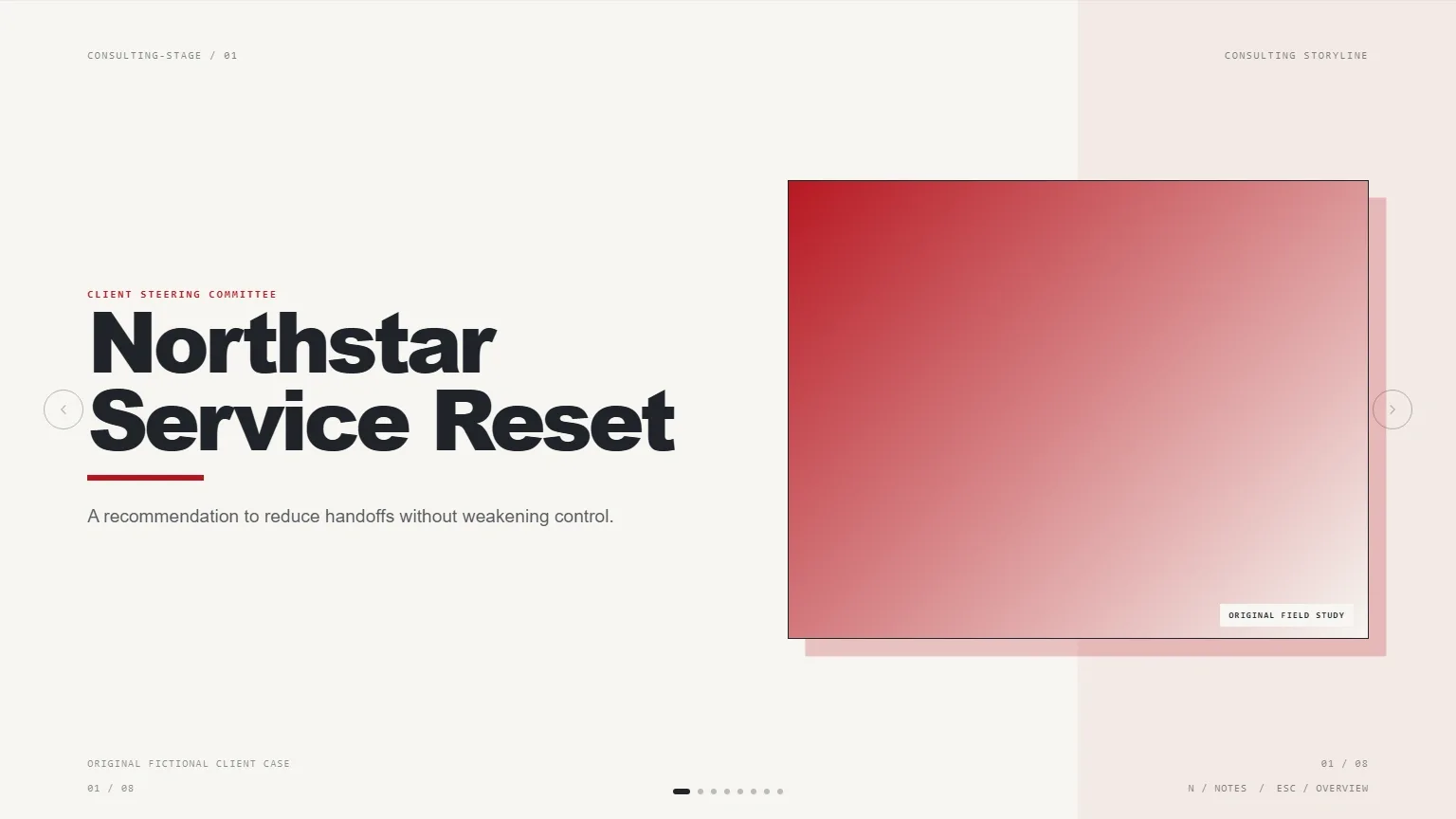
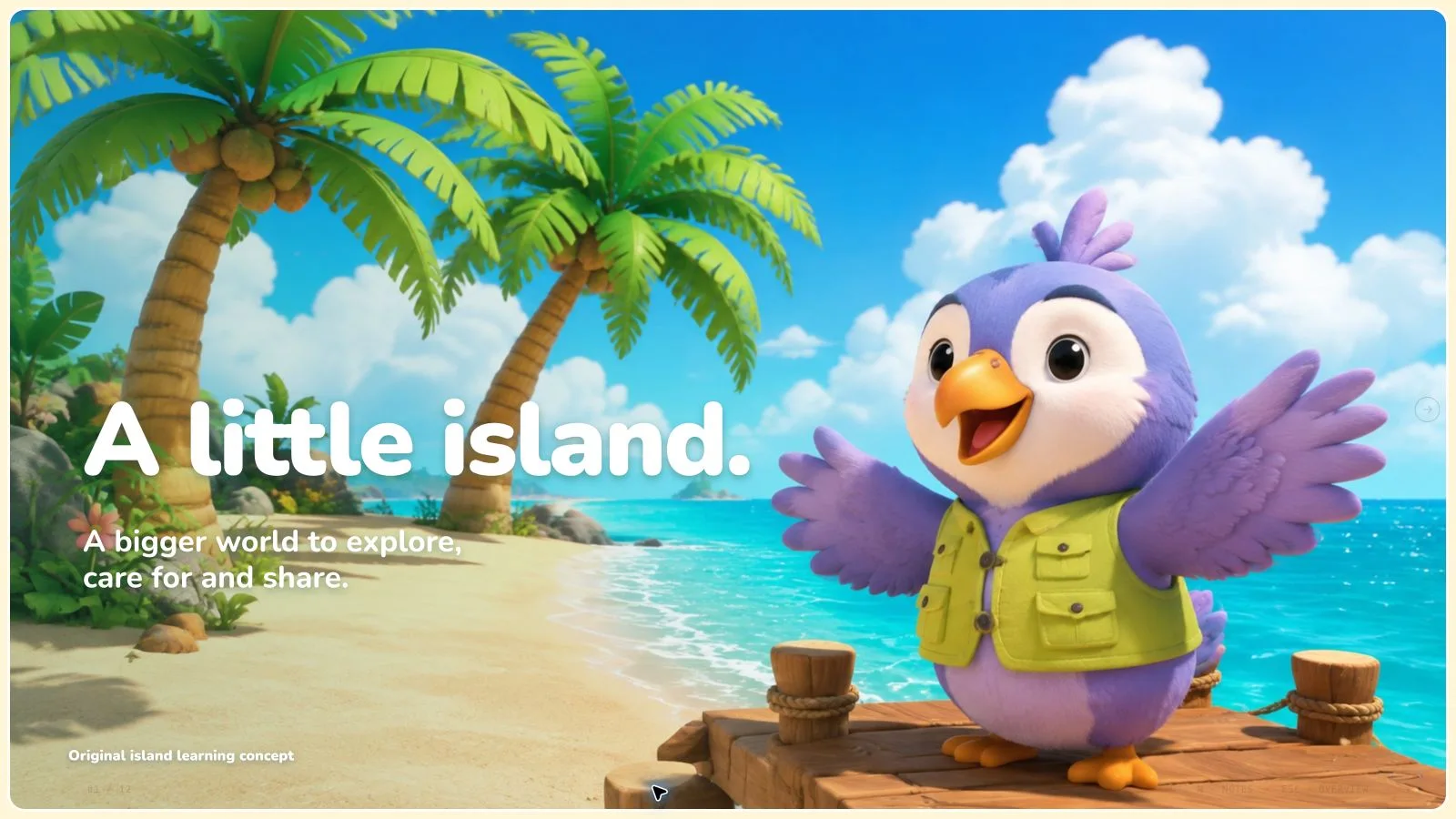
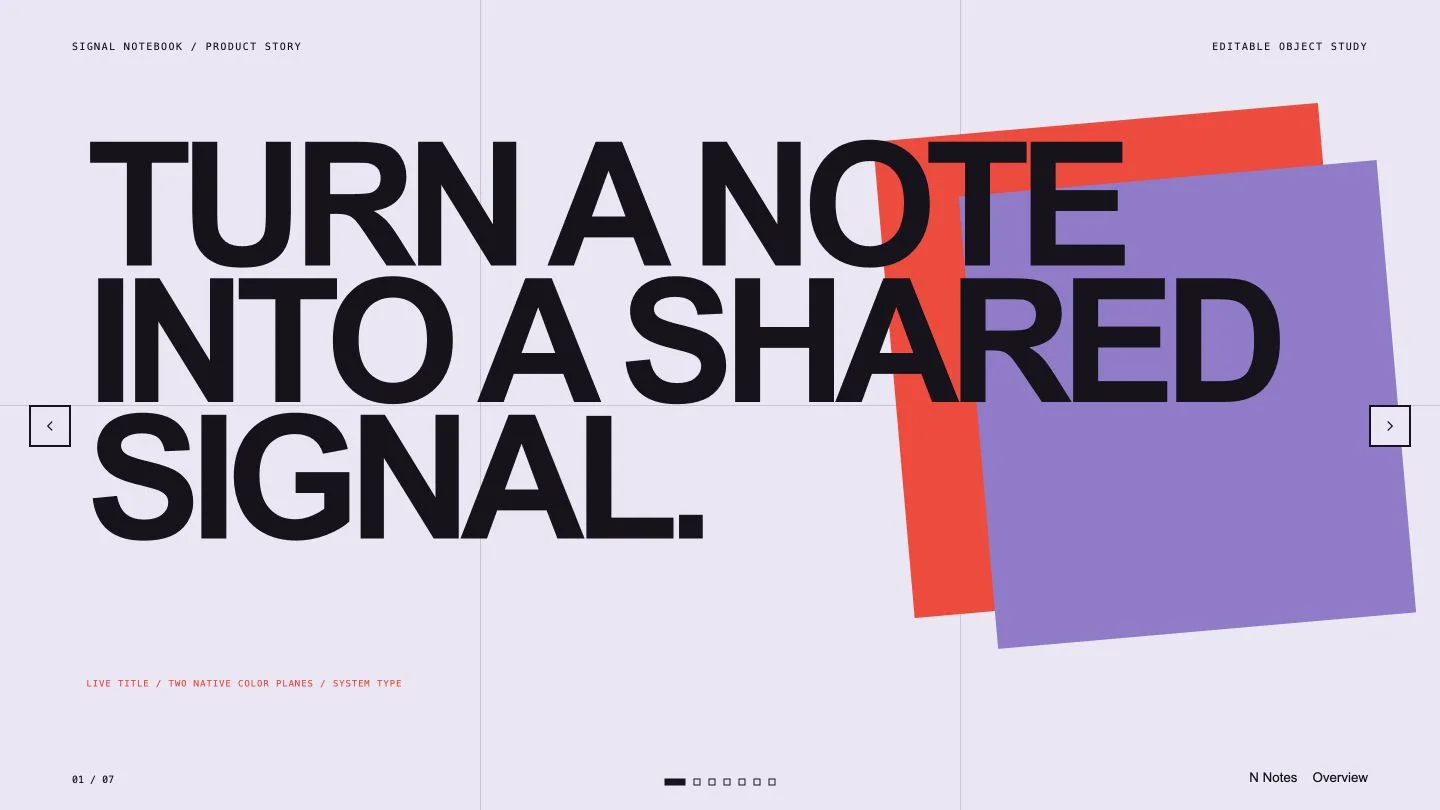
Pitch a product through a short sequence of problem, vision, solution and evidence, ending with a defined next step. Cobalt Ribbon Pitch Deck uses electric-blue ribbons on near-black pages, large white type and pale offset panels, with a single light roadmap page. The browser deck remains editable while the PowerPoint handoff distinguishes live text from rendered artwork.
What you get
Eight reusable pitch layouts: cover, problem, vision, solution, evidence, roadmap, team and closing invitation. They can repeat or be dropped to fit the requested length. The eight-page example supplies composition and fictional case content, not a verified investor argument or a prebuilt report about your product.
A restrained dark keynote system with embedded Inter Tight display and Inter body fonts, large headings, ruled evidence columns and one accent emphasis per page. Left/right/top scrims protect type over ribbon imagery. The roadmap stays the only light page; the solution page alone uses the signature card-over-photo arrangement.
Four generation-time accents—Cobalt Ribbon, Violet Ribbon, Teal Ribbon and Amber Ribbon—and thirteen local library assets spanning abstract ribbons, collaboration, devices and a fictional group portrait. Thirteen recipe image slots include background artwork and three team windows; a group-photo crop is not three separately verified people.
A standalone 16:9 HTML presentation with browser viewing/editing, notes and presentation mode, plus Python composition/build/check tools and Node image helpers in the installation. The generic schema fixture is not a completed case presentation. Final HTML embeds its assets and can be presented offline.
Requested PPTX with editable text and speaker notes, separate pictures and rendered ribbon/background/chart layers, or PDF with one page per slide. The result does not promise native editable charts or identical typography on every recipient’s machine.
Before you choose
Check the evidence page before the cover: what is actually measured, what is a hypothesis and what decision follows? Keep the roadmap’s exit targets consistent with that distinction. The strong dark visual treatment should make the case easier to follow, not make an unsupported projection sound proven.
Good fit
A technology or operational product team needs a clear concept pitch with a problem, proposed response and measured evidence.
An investor-facing concept deck is intended to support a defined decision, with illustrative figures separated from actual results.
A team is asking approval for a short product pilot and can supply the scope, accurate dates, source measures and final invitation.
Not for
A pastel classroom or document-style presentation. The authored rhythm uses dark canvases, strong type and a single light roadmap interruption.
Copying identities, photographic subjects, names, slogans or screenshots from a visual reference. Library team imagery remains fictional rather than proof of your personnel.
A claim that charts, drawings and ribbon artwork export as native PowerPoint chart/shape components.
Treating sample market/pilot measures or the example’s people as verified facts about your own business.
How to use
You say/cobalt-dark-pitch-deck Make an eight-slide pitch for Relay, a fictional product that turns operational updates into decisions.
Provide the topic/outline, audience, one desired decision, approximate count and the figures, dates and permitted images that must be accurate. Identify which measures are illustrative and supply their meaning/units. Choose the slide language explicitly if it should differ from the default English.
Outline problem, vision, solution, evidence, roadmap, team and final invitation using the eight recipes as a vocabulary. Adapt length to the brief. Keep the roadmap light and the other pages dark, using the solution card/photo overlap only in its intended role rather than repeating it throughout.
Choose Cobalt Ribbon, Violet Ribbon, Teal Ribbon or Amber Ribbon during generation. Preserve the embedded font pair and 12-column grid: 77px margins, 26px gutters, content roughly y79–634 on the 1280×720 canvas. Use a scrim on the copy side. Titles stay within seven words (cover five), visible page copy within about forty-five, with no more than three blocks and roughly thirty percent empty; detail goes to notes.
Choose suitable library reuse, generate only gaps or regenerate the set, with approved user assets first. The thirteen bundled pictures can be checksum-verified and embedded by the Node helper. Distinguish decorative ribbons from documentary imagery. Team windows can share a deliberate group-photo crop or use approved separate portraits, but fictional sample people must never become real employee identities.
For authorized new pictures, use the available built-in tool or the optional paid FAL helper with FAL_KEY. Record a returned task ID and use status/fetch on that task without automatically resubmitting failures; account limits or charges may apply. Follow the kit’s 16:9/3:2 source aspects and frame crops, keep words outside new art and list unavailable slots rather than claim a complete visual build.
Populate recipes with approved copy, values and notes, resolve example leftovers, then compose/build/check with Python 3. Node belongs to the media-helper path rather than core assembly. Keep fonts/images embedded and the shared editor unchanged. Review factual disclosures even when the restrained visual style leaves little space for a footnote.
Open over local HTTP and inspect every page for legible type over ribbons, chart labels, accurate numbers, crops, block alignment and bounds. Use Edit or E to change wording, images, order and notes; test object changes, undo/redo, Save and reopening. Named accents are generation choices; the shared editor does not include a preset switcher.
Present the HTML or export the requested PPTX/PDF, run check-pptx.py and inspect the result in PowerPoint, Keynote or WPS. Confirm text/notes, rendered charts and actual font substitution before sharing; file creation alone does not verify presentation fidelity or the business case.
Requirements and costs
You bring
Your topic or outline, audience, and intended decision. · The approximate page count and source figures that must be accurate. · Any permitted photographs or artwork you want included.
Dependencies
Modern browser — required for presentation and browser editing · Built-in image generation in your agent (GPT Image class) — only needed to create new pictures; no separate API key · Chrome, Chromium or Edge plus Node.js 20 or newer — required only for PowerPoint export · Internet access — optional, to download this Skill's picture library while building a deck
Outside costs
Decks can reuse this Skill's own picture library at no image cost: you choose up front whether to reuse it or generate every picture new. New pictures use your agent's built-in image generation tool (GPT Image class) with no separate API key, and availability follows your agent account.
Publisher testing
v1.0.3 — Claude Code / Claude Desktop / Cowork / Codex / ChatGPT
FAQ
Yes. Use Edit or E to revise text, pictures, order and notes in the standalone HTML, then Save the file. Individual content colors remain editable, while named presets are generation choices. PPTX keeps text and notes editable, photos separate and complex artwork/charts as rendered layers.
Not for suitable reuse of the thirteen local library pictures. Approved supplied images come first. New images can use an available built-in tool without a separate FAL key, or the optional paid FAL helper with its own key; availability/charges follow the selected account. Core build/check uses Python 3, while the image helper uses Node.
No. The example is fictional, with illustrative case measures and people. Replace them with approved evidence or label a demo clearly. A generated group portrait does not establish your actual team, and an attractive chart does not validate its values.
Eight layouts demonstrate the authored sequence, but recipes can repeat or be omitted for the requested length. Preserve the one light roadmap and distinct page jobs rather than padding the story to match the example.
User reviews
—0 reviews
Select a star to share your experience.
No reviews yet. Ratings appear once readers share real experiences.