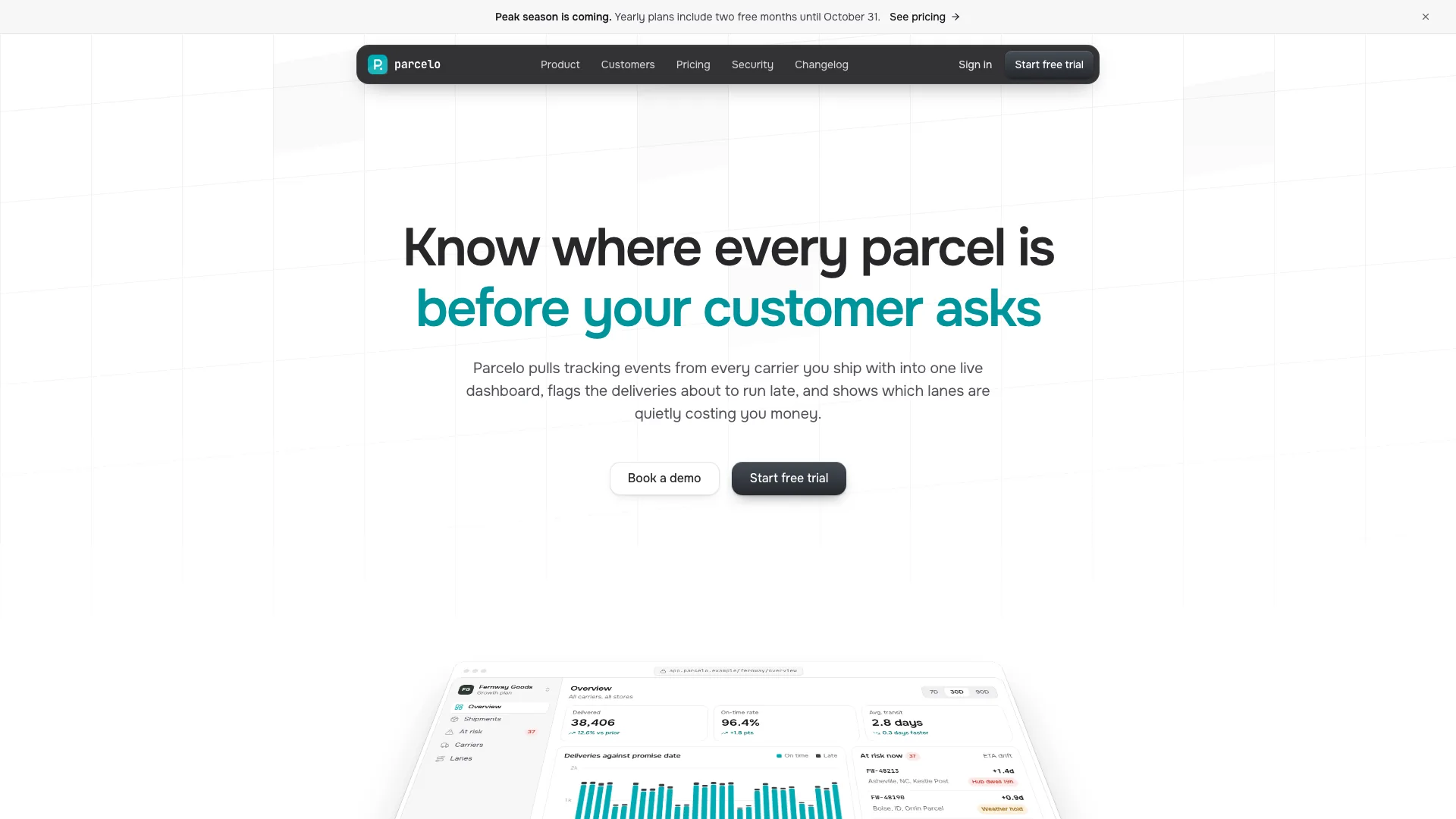
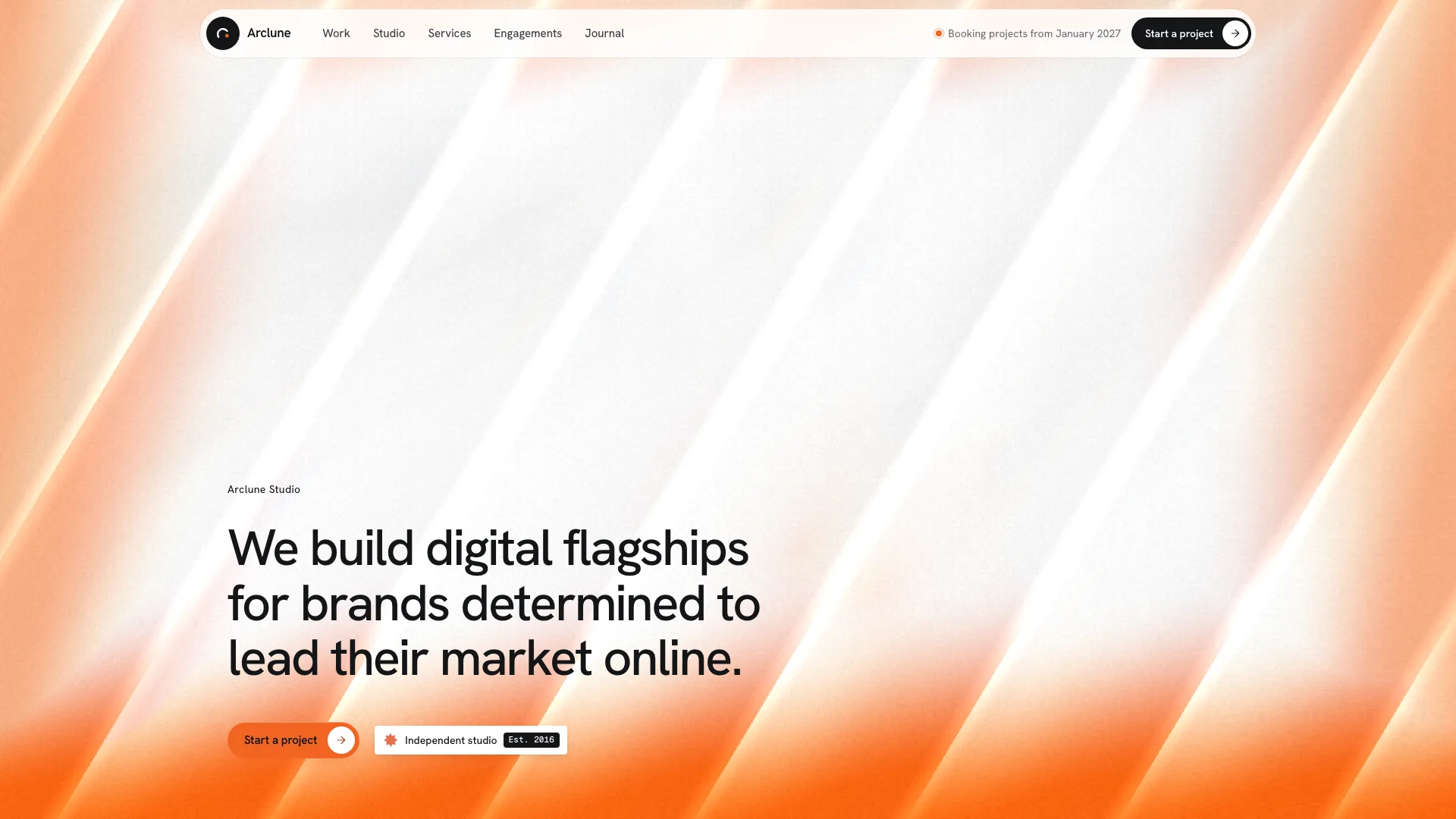
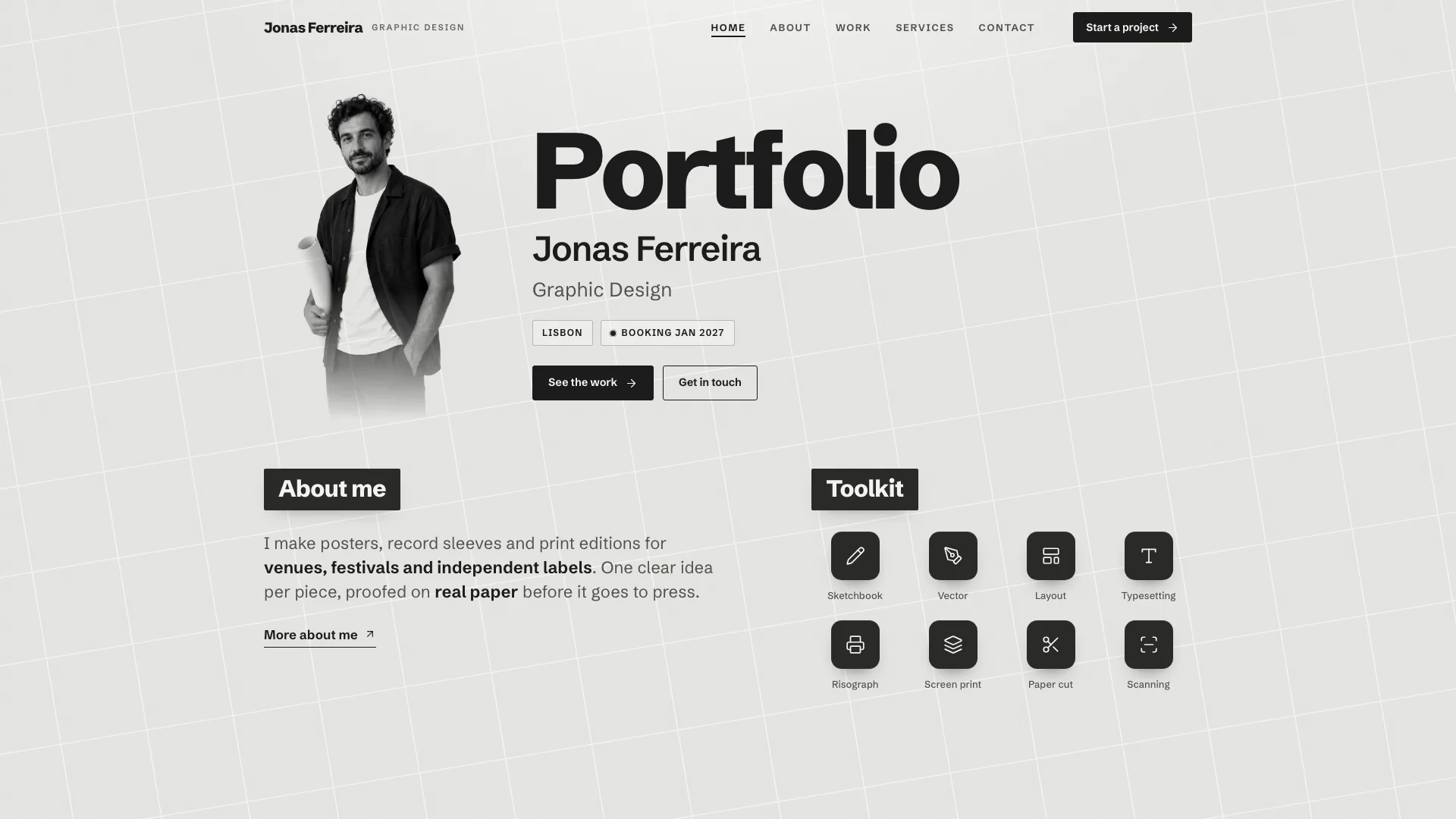
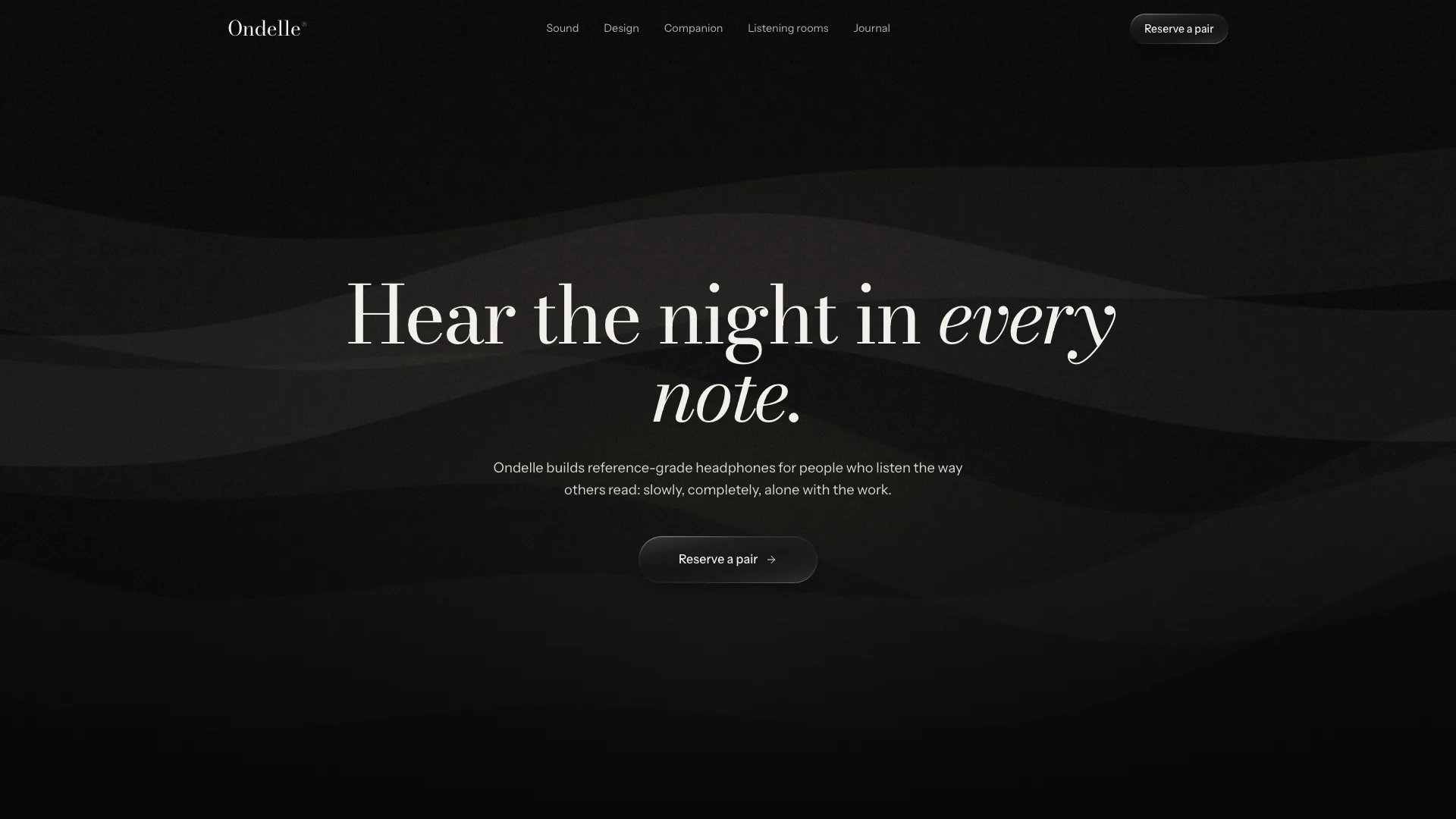
Help a prospective client move from liking your work to understanding how to hire you. Lime Frame places a personal portrait and availability inside a bright lime-bordered sheet, then gives each service and project its own page. The useful depth is in scope, timing, deliverables and related evidence, rather than a single attractive introduction.
What you get
A connected portfolio with Home, About, service index and detail, work index and case studies, testimonials, searchable FAQ, a brief form, privacy and a missing-page view. The fictional reference has nineteen pages; your services and projects determine the adapted page set.
A home sequence with a three-column introduction and centered portrait, availability and social controls, client-wordmark marquee, service index, collaboration/process imagery, near-black statistics band, featured work, quotes and lime closing action.
Service pages explaining price, timeline, inclusions and steps, paired with case pages showing brief, results, delivered items and an in-page showcase. Project screens and mockups are built in the page rather than invented as text inside a generated photograph.
Work search and filters, topic-based FAQ search, testimonial navigation and a brief form with selection chips and validation. The standalone deliverable embeds assets for offline opening; an existing or requested framework project can use real routes and components.
Before you choose
Choose this when explaining an engagement is as important as displaying the work. Read one service, a related case and the relevant FAQ as a client would: scope and timing should agree. A strong portrait can establish personality, but a clear offer makes the next action meaningful.
Good fit
A freelance designer or small studio wants a confident personal identity and a concrete explanation of its offers.
You have clearly scoped services with prices and timings, plus projects that demonstrate the deliverables a client will receive.
A photographer, illustrator or developer can map commissions or builds onto the same service-and-case structure without pretending all work is product design.
Not for
A muted corporate identity: the lime border, bold type and personal portrait are part of the authored direction.
A link-in-bio or one-page resume. Much of the value is in the connected service, case and FAQ pages.
Live booking, payments or delivered enquiries through the local brief/newsletter forms alone.
How to use
You say/lime-frame-designer-portfolio Build a portfolio site for Rowan Ashby, a digital designer working with founders and small teams.
Provide name, role, one-line offer, availability and contact facts, then prepare services with prices, timing and inclusions. For each project, collect client context, your role, brief, delivered work and supported results. Use permitted quotes and portraits, and mark missing facts for confirmation.
Plan the service-to-project path before populating the home page. The package supports two to six services and three or more projects; update grid arrangement, featured selections, counts and headings as those collections change.
Use your own portrait and a working photo where possible, with real approved client headshots for quotations. Otherwise plan a consistent image set and identify generated people as stand-ins; new image work may incur tool charges. Build actual project showcases in code or use permitted real work images.
Choose the default self-contained file or adapt to the existing/requested framework. The standalone output embeds fonts and images; when a framework is requested without a name, the package uses Next.js with TypeScript. Preserve the connected pages and visual hierarchy in either output.
Inspect every service and case on desktop and phone. Search work and FAQ, browse quotes, check the selected brief chips and submit invalid/valid test data. Ensure price, revisions, steps and deliverables agree across service pages and FAQs, and connect real enquiry delivery separately.
Requirements and costs
You bring
Name, two-word role, one-line offer, availability date and contact details · Services with price, timeline and inclusions, plus projects with client, brief and results · Your portrait, client quotes and FAQ answers (optional; gaps become listed placeholders)
Dependencies
Node.js 18 or newer on your agent's machine, to run the bundled script that builds the single offline file · Internet access while the file is built, so the fonts can be downloaded once and embedded · An image tool in your agent for photos you do not supply (optional if you provide your own portrait and project images)
Outside costs
Photos you do not supply (portrait stand-ins, process shots, project covers) are generated with your agent's own image tool, which may incur that tool's usage charges. Nothing else uses a paid service.
Publisher testing
v1.0.2 — Claude Code / Claude Desktop / Cowork / Codex / ChatGPT
FAQ
One self-contained HTML site with embedded assets and internally linked pages. In an existing or requested framework project, adapt the content into routes and components. Verify the built file’s offline behavior rather than assuming the unbuilt template has no remote references.
Your portrait and working images are best for a site selling your practice, and client photos need permission. The agent can generate supporting images or stand-ins using its own image tool, which may charge, and should list generated people for replacement. Project screens are built into the page rather than baked into generated photographs.
Yes. The package describes two to six services and three or more projects. Adapt grid details, featured slugs, filters and number-based headings together; the sample counts should not survive as incorrect claims.
Not by itself. The local form collects and validates choices but does not send, reserve or charge. Connect the real enquiry and scheduling process before describing that outcome.
User reviews
—0 reviews
Select a star to share your experience.
No reviews yet. Ratings appear once readers share real experiences.