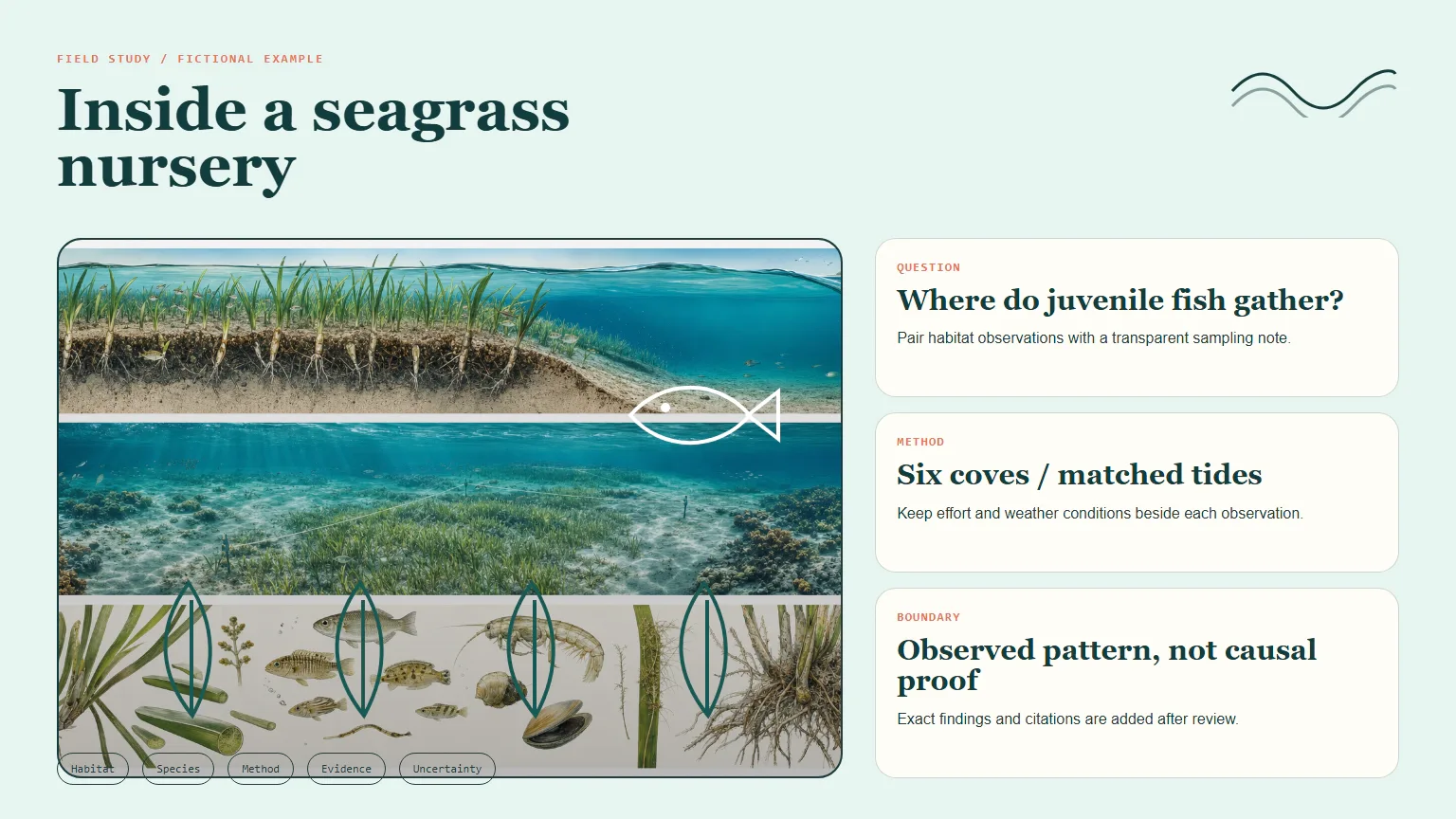
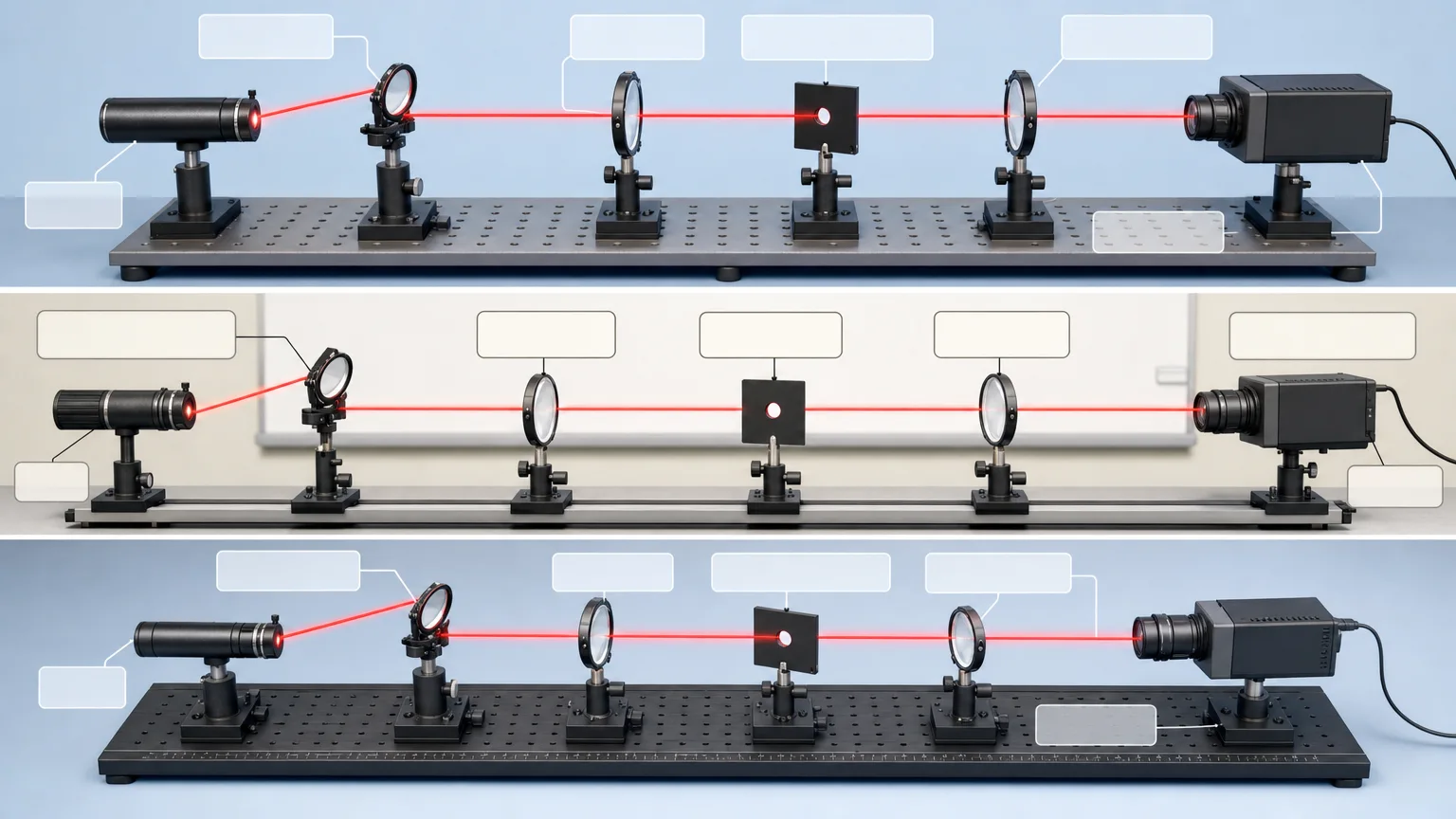
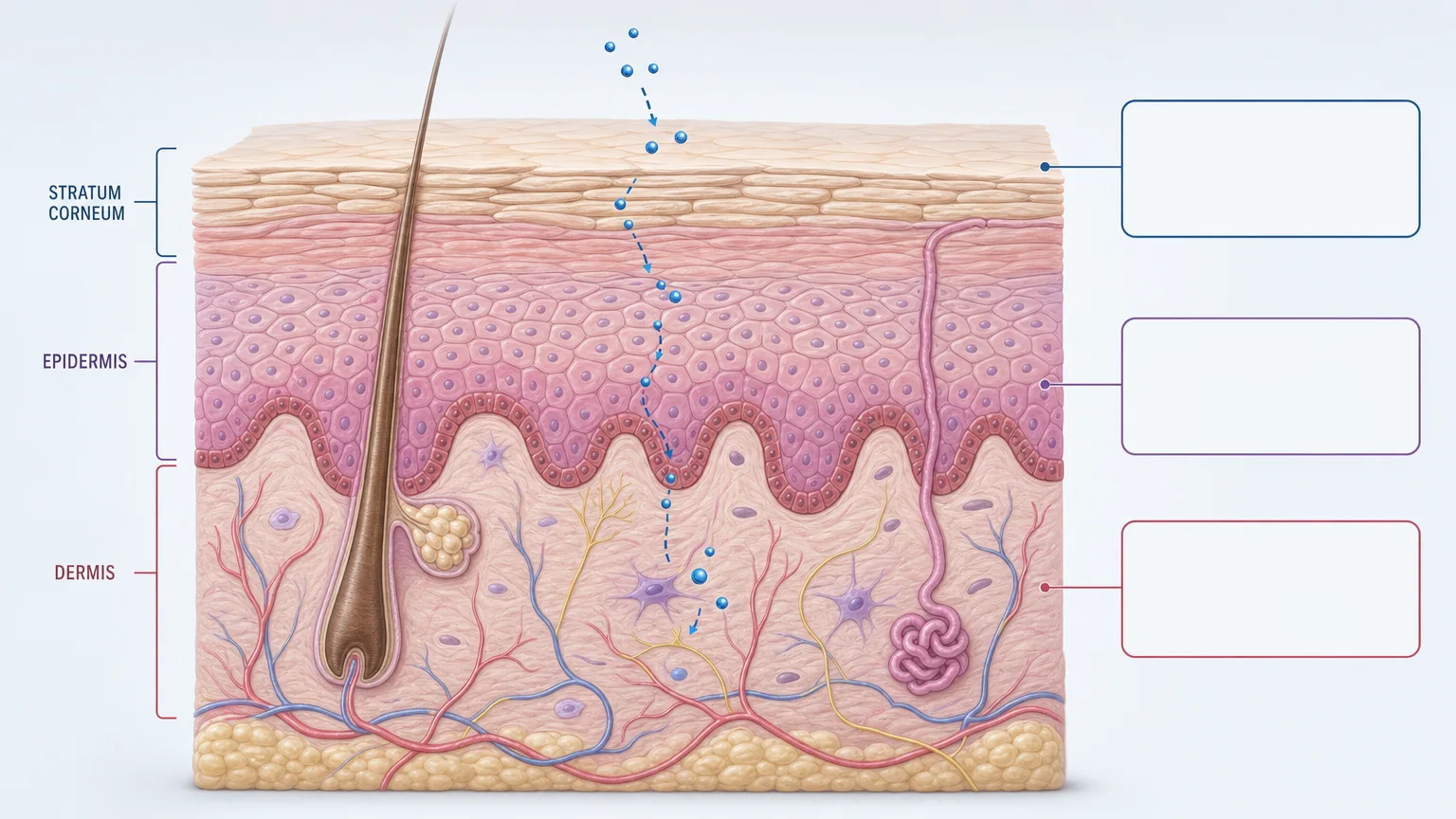
Show how a material is built from an approved outer-to-inner stack without inventing hidden structure. Layered Material Cutaway exposes the interfaces, gives verified material classes distinct textures and reserves a callout rail for each layer. Enlarged thickness can improve explanation, but it stays explicitly illustrative rather than implying measured scale or performance.
What you get
Three 16:9 cutaway alternatives that preserve the approved layer order and expose each interface. A layer ledger records order, material, function, thickness status and evidence source, so visible geometry can be compared with the supplied stack.
A color/texture family for each verified material class, with known bonding, coating and interface details represented only where supported. Unknown layers or material properties are not added just to make a richer cross-section.
One straight annotation rail per layer, with exact names, values, citations and disclaimers added afterward in a deterministic layout tool. A caption identifies visually exaggerated thickness; the base artwork is not a dimensional source.
An evidence comparison and final uncertainty list alongside the images. The cutaway communicates composition and function but cannot prove food safety, health benefit, durability or thermal performance.
A paid FAL request for three high-quality 1536×864 PNG variants, supported by the bundled wrapper and SVG icon reference. The script checks the returned count, not layer correctness, actual image dimensions or scale. Final typesetting and visual/source checks complete the delivery.
Before you choose
Trace the cutaway from the outermost layer inward using the ledger. Every interface and callout should have a matching source entry. If enlarged proportions help reading, say so plainly; do not let apparent precision or attractive materials imply a measured property.
Good fit
A researcher needs a clear layered-material figure for a talk, poster or review.
A science communicator wants to explain a verified stack and the role of its interfaces.
A product marketer has approved material facts and needs an evidence-bounded visual product story.
Not for
Proof of food safety, health, durability or thermal performance inferred from how a material looks.
To-scale section drawings without measured thickness data and separate geometry validation.
Projects that require invented hidden layers, unsupported coatings or unauthorized certification/manufacturer marks.
How to use
You say/layered-material-cutaway Show my verified five-layer thermal panel as a clean educational cutaway.
Provide the outer-to-inner layer stack, measured thicknesses or explicit relative-thickness guidance, known interface/bond/coating details and audience/use. Ask for missing essentials or keep verification placeholders; do not silently infer hidden layers.
Build the layer ledger with each material’s order, function, thickness status and evidence. Choose a cutaway exposing every interface without changing that order. Assign distinct but restrained material colors/textures and decide where thickness must be exaggerated for readability.
Write a fresh English brief for unlabeled art and one straight rail per layer. Keep exact copy and specifications outside generation, include the planned illustrative-thickness caption, and exclude unsupported performance, certification or brand implications. Review the prompt before payment.
Use Node.js 20 or newer with a FAL account and FAL_KEY in the environment. One paid task requests three 1536×864 high-quality PNG variants. Dimensions are fixed in the wrapper; it performs no material simulation or thickness measurement.
Keep provider-task.json and the approved prompt. Once a request ID is saved, the same prompt/output directory resumes that task and recorded failures are not automatically resubmitted. The record follows the submission response, so inspect provider history before retrying an uncertain response or failed write. Preserve approved copies separately because resumed downloads can overwrite matching paths.
Compare every alternative with the ledger: count layers, trace their order and interfaces, and check material/texture distinctions and unverified geometry. Verify actual ratio, visual distinction and absence of unwanted identity/watermarks. Add approved labels, values, citations and the thickness qualifier with a deterministic tool, using restrained inline SVG for functional callouts.
Deliver reviewed images, the evidence table and unresolved items. State which proportions are explanatory and which have measured support; neither polished texture nor a checked layer order establishes safety or performance.
Requirements and costs
You bring
Ordered material stack from outermost to innermost · Verified thicknesses or relative-thickness guidance · Known interface, bonding, or coating details · Audience and use context
Image generation uses a paid fal.ai task. Review the prompt before submission; failed tasks are never submitted again automatically.
Publisher testing
v1.0.1 — Claude Code / Claude Desktop / Cowork / Codex / ChatGPT
FAQ
An ordered material stack, verified thicknesses or relative guidance, known bonding/coating/interface details and the audience/use. The ledger keeps thickness status and sources visible. Missing facts remain verification items rather than new hidden layers.
No. Generate the cutaway with clear annotation rails, then typeset exact names, values, citations and disclaimers from the approved table. Caption any exaggerated thickness. The wrapper does not measure geometry or supply a deterministic labeling renderer.
No. It explains the approved composition and does not demonstrate food safety, health benefit, durability or thermal performance. Measured thickness is a prerequisite for scale claims, not automatic validation of a generated section. Node.js 20+ and a paid FAL request support image creation only.
User reviews
—0 reviews
Select a star to share your experience.
No reviews yet. Ratings appear once readers share real experiences.